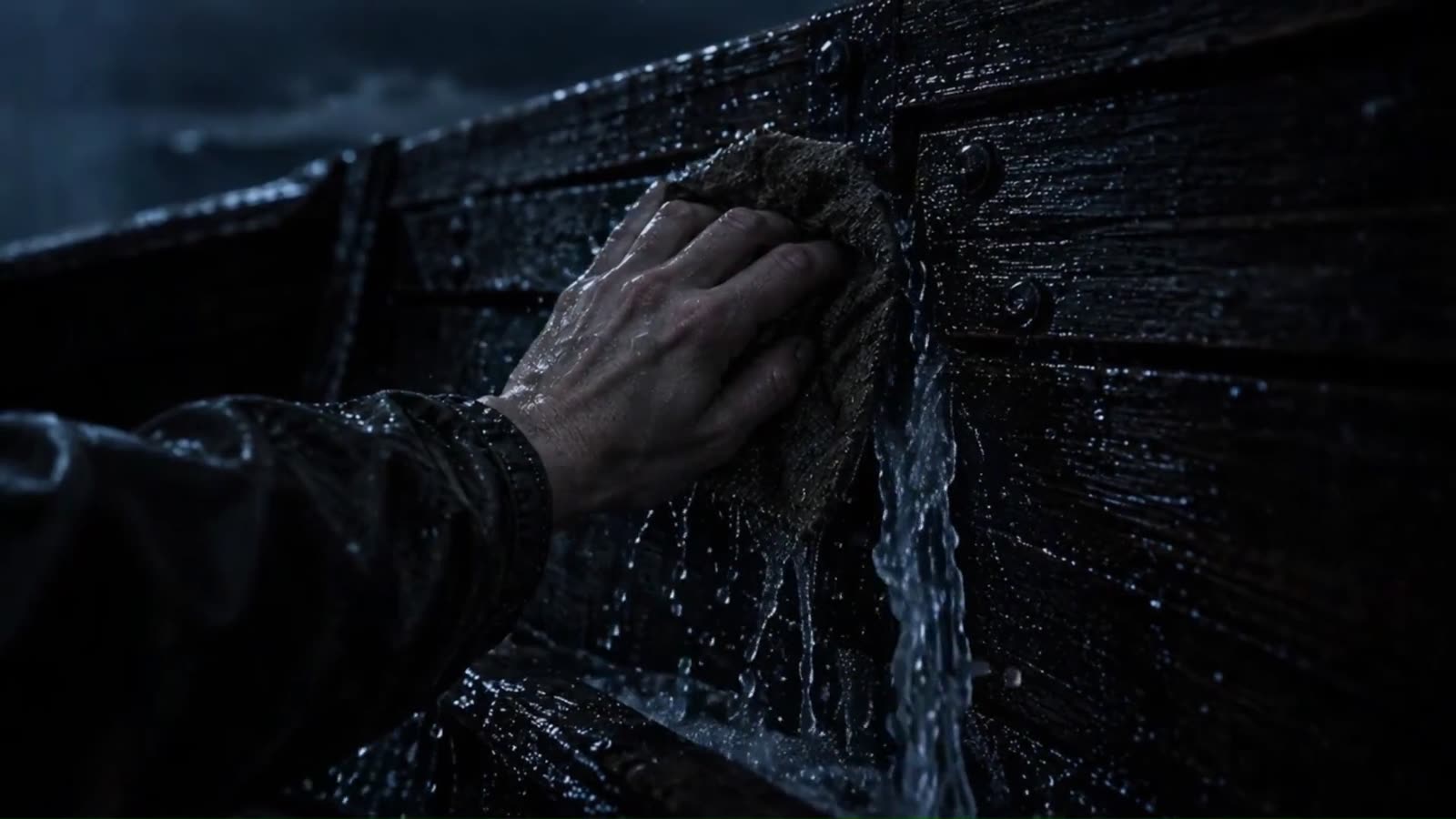
“I patched every crack. I bailed every bucket.”
The water keeps rising. She keeps trying to save the boat. Then she stops long enough to see something her original explanation couldn’t account for.
The water hasn’t stopped. But what she understands about it has changed, and with that, what she believes she can do.
“I patched every crack. I bailed every bucket.”
A frame is what you think with, not what you think about. Before any reasoning starts, it has already decided three things: what counts as evidence, what matters most, and which moves are even possible.
You can watch all three change in the song. The situation stays: the leak, the rising water, the two of them in the boat. What changes is one piece of evidence she finally sees, and then what all of it means.
That bottom row is why she couldn’t leave. A frame’s deepest rule doesn’t feel like a belief. It feels like the way the world works. She called it gravity, and nobody argues with gravity.
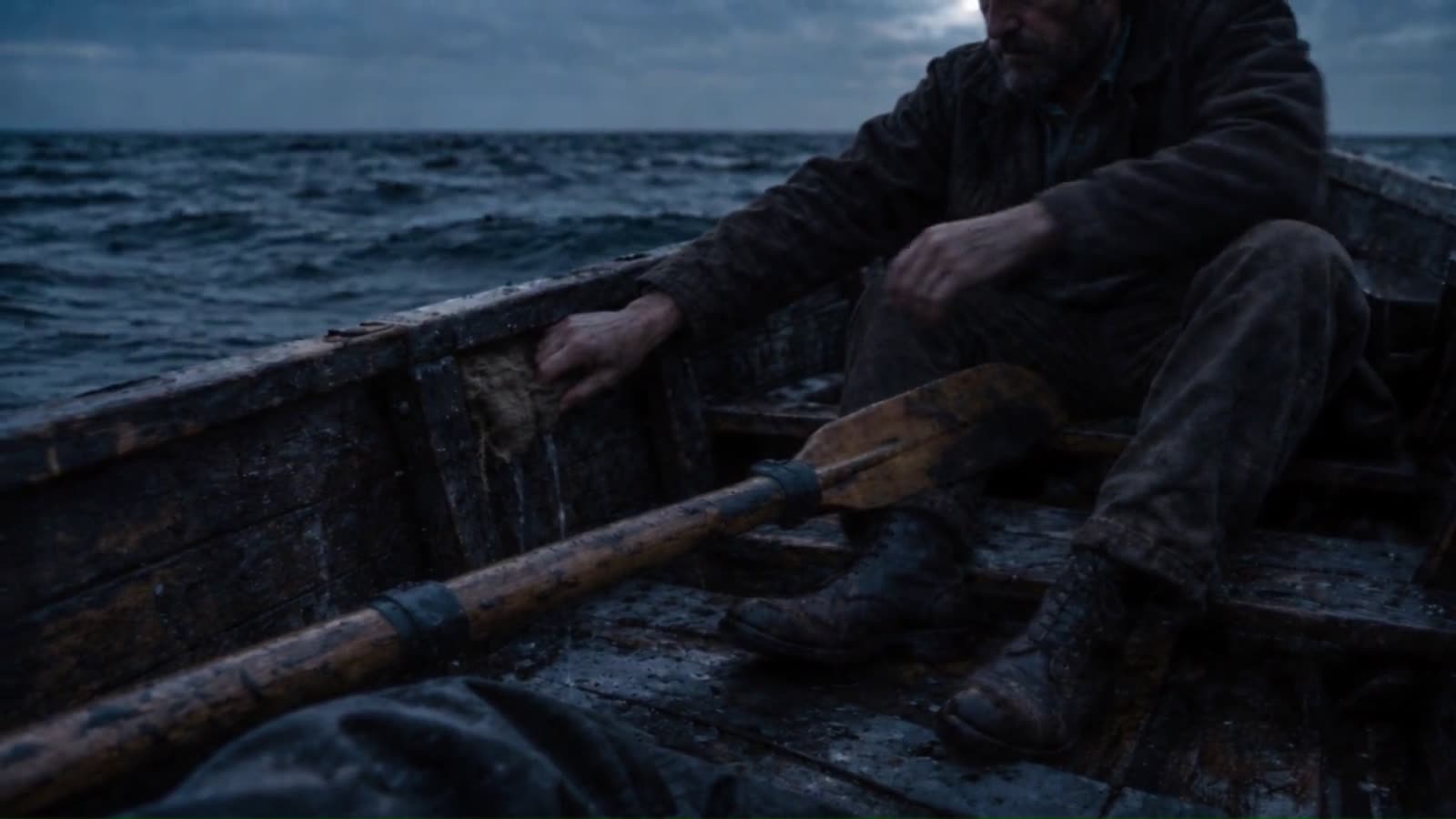
“Then I saw your hands.”
More of the same information often doesn’t move a frame. Every new crack in the song only got another patch, and each fix felt like proof that pulling harder was the answer. What moved hers was different in kind: a contradiction she stopped long enough to look at, and then evidence the old rule couldn’t absorb. Here is how it went in the song. Other changes take other paths.
Step three is the hard one. A frame is hard to see from inside it, the way your own eyes are hard to see. It often takes light from somewhere the rule doesn’t reach: another person, another place, another story. Even then, seeing isn’t the same as changing. She also needed a next step she could actually take, and enough reason to pay what it would cost.
Related patterns turn up far from the water, each by its own route. A family drives to Abilene, a trip none of them wanted, because each kept their own preference quiet. In a cockpit sized for the average of thousands of pilots, the average matched none of them. A couple reads the same silence several ways before one more fact arrives. In each, what someone assumes shapes what the facts are taken to mean.
The same water. A different law.
None of this is new. For a century, people kept finding the same thing: a psychologist looking at pictures, a philosopher looking at words, a sociologist watching ordinary conversations, a scientist teaching computers, researchers studying how people choose, therapists listening to families.
What has been missing is the whole picture. Not because anyone was careless, but because of the very thing they were finding. Each of them saw one piece, named it in their own field’s language, and published it where their own field would read it. Figure and ground, the definition of the situation, a mental template, a framing effect, a paradigm: from inside each field, the others looked like a different subject. Every field was inside its own frame. So the pieces sat side by side for a hundred years without being seen as one.
Here is the short version, in order. Read it as one story.
Each found a different piece. Follow one thread through the century:
Side by side, they stop looking like separate findings. Together they describe six parts of one picture. The song happens to show all six; a change of frame doesn’t always pass through them, or in this order.
Each part was found by someone, somewhere, under a different name. What none of them could show alone is that they can be read as one movement, from inside a frame toward outside it, recognizable in a life, a family, a company and a machine, though never quite the same in any two.